Showing posts with label Strathcona Wilderness Centre. Show all posts

Friday, 27 January 2023

Wilderness Adventures: First Families & Snowshoeing

On Friday, we spent the day at the beautiful Strathcona Wilderness Centre! 

Our morning kicked off with the Indigenous First Families program, led by Nadine. We explored how families used to live a long time ago. We learned so much about the Inuit people of the Arctic, the Plains First Nations, and the Woodlands First Nations of Eastern Canada. 


Nadine began by explaining why the first families in Canada thrived. There were no stores like Costco, so these people were excellent hunters. They lived in community, supporting each other in many ways, such as sharing food and child care. The children had chores and responsibilities that helped their families survive, too. While they didn't attend school, children learned from elders how to hunt, make clothing, cook, and so much more. 


The Inuit

The Inuit lived in the north, often in igloos. Nadine shared many fascinating items with us from the Inuit people. We touched a ring seal fur. Fur from ring seals was used to make clothing and "kamiks", or shoes. One student tried on a cozy seal fur parka, which is very warm, as well as caribou kamiks! He gave snow goggles a try, too, which are wooden glasses with thin slits that protect the eyes from the sun's glare off the snow. 


The Plains First Nations

The people of the plains would follow the buffalo and hunt them. They often lived in tipis, which could be quickly and easily set up, taken down, and transported. 

Nadine shared that the Plains First Nations were known for their love of celebrations, or "powwows". She showed us an elaborate fan that the women would use, and when it waved it sounded as though birds were flapping overhead! She dressed up one of our students in some traditional celebratory clothing. She wore a bone and bead choker, beaded moose moccasins, a breast plate (often used as chest protection during battle), and a moose skin wrap. We saw a replica headdress. Traditionally it is made of eagle feathers (although this one was not), and each eagle feather on a headdress represents a brave or kind deed. 


The Woodland First Nations


The Woodland First Nations lived in the forests of eastern Canada around the Great Lakes. They were amazing hunters. Nadine shared a variety of beautiful furs with us. 

The Woodland First Nations lived near many lakes, and made canoes from the bark of birch trees so they could travel through the water. 


After hearing so many interesting facts and seeing the amazing collection of artifacts, it was time to touch them ourselves! The students most enjoyed feeling the silky furs and pelts!


Then the students were challenged to get creative! Using paper, feathers, and markers, the children got to work designing their own fans. They were encouraged to draw scenes from nature, and many drew rainbows, flowers, animals and more!

Perhaps the highlight of the morning was learning several of the games the children would have played. While they were simple, with few rules or game pieces, they were challenging and fun for everyone!  

After a quick lunch, we jumped into snowshoeing! We learned that Snowshoe Hares have wide feet that snowshoes are designed after. 


Then we snapped up our own snow shoes and headed out! We played relays, tag games, and Simon Says, and then headed out on a walk in search of signs of animals. 


It was a beautiful day of learning!

Saturday, 26 January 2019

Amazing First Families

Yesterday we welcomed in Nadine from the Strathcona Wilderness Centre! She spent the afternoon sharing with us how families used to live a long time ago. We learned so much about the Inuit people of the Arctic, the Plains First Nations, and the Woodlands First Nations of Eastern Canada. 


Nadine began by explaining why the first families in Canada thrived. There were no stores, like Save On or Costco, so these people were excellent hunters. They lived in community, supporting each other in many ways, such as sharing food and child care. The children had chores and responsibilities that helped their families survive, too. While they didn't attend school, children learned from elders how to hunt, make clothing, cook, and so much more. 


The Inuit

The Inuit lived in the north, often in igloos. Nadine shared many fascinating items with us from the Inuit people. We touched a ring seal fur. Fur from ring seals was used to make clothing and "kamiks", or shoes. One student tried on a cozy seal fur parka, which is very warm, as well as caribou kamiks! He gave snow goggles a try, too, which are wooden glasses with thin slits that protect the eyes from the sun's glare off the snow. 


The Plains First Nations

The people of the plains would follow the buffalo and hunt them. They often lived in tipis, which could be quickly and easily set up, taken down, and  transported. 

Nadine shared that the Plains First Nations were known for their love of celebrations, or "powwows". She shared an elaborate fan that the women would use, and when it waved it sounded as though birds were flapping overhead! She dressed up one of our students in some traditional celebratory clothing. She wore a bone and bead choker, beaded moose moccasins, a breast plate (often used as chest protection during battle), and a moose skin wrap. The most amazing piece she wore was the replica headdress. Traditionally it is made of eagle feathers (although this one was not), and each eagle feather on a headdress represents a brave or kind deed. 


The Woodland First Nations


The Woodland First Nations lived in the forests of eastern Canada around the Great Lakes. They were amazing hunters. Nadine shared a variety of beautiful furs with us. 

The Woodland First Nations lived near many lakes, and made canoes from the bark of birch trees so they could travel through the water. 
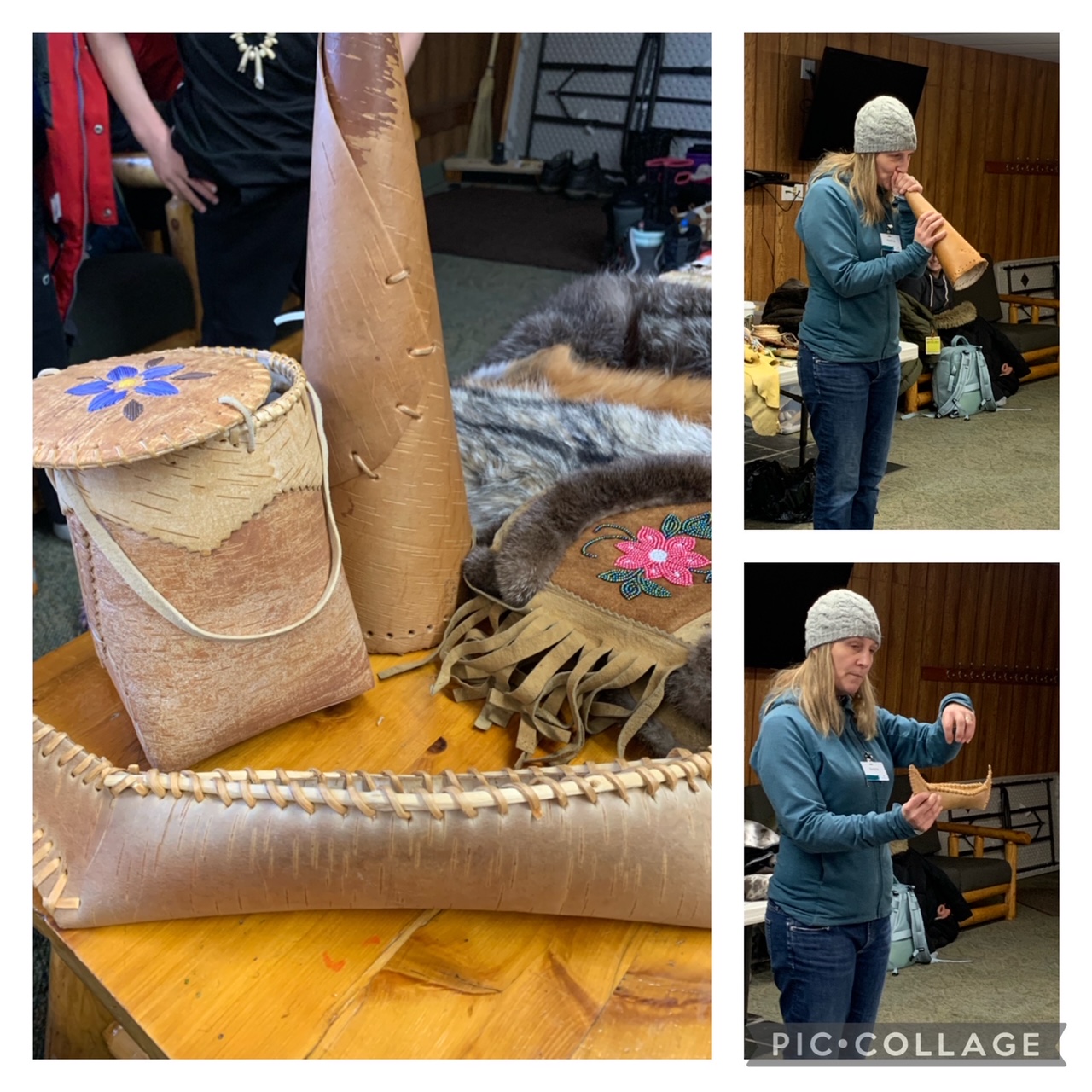


After hearing so many interesting facts and seeing the amazing collection of artifacts, it was time to touch them ourselves! The students most enjoyed feeling the silky furs and pelts, and many tried out the birch bark horn!


Then the students were challenged to get creative! Using paper, feathers, and markers, the children got to work designing their own fans. They were encouraged to draw scenes from nature, and many drew rainbows, flowers, animals and more!


Perhaps the highlight of the afternoon was learning several of the games the children would have played. While they were simple, with few rules or game pieces, they were challenging and fun for everyone! 


With a bit of energy left to burn, we headed outside to learn one last game. Kick Stick had us cheering and laughing, as classmates kicked sticks in teams in a relay race. The children were excellent sports and enjoyed the challenge of the simple games. 


Our First Families program last week was fascinating, packed with new information, and so much fun!

Sunday, 20 January 2013

First Families

Last Friday we welcomed in Mary from the Strathcona Wilderness Centre! She spent the afternoon sharing with us how families used to live a long time ago. We learned so much about the Inuit people of the Arctic, the Plains First Nations, and the Woodlands First Nations of Eastern Canada. 

Sharing many treasures and artifacts
from the First Families of Canada. 
Mary began by explaining why the first families in Canada thrived. There were no stores, like Save On or Costco, so these people were excellent hunters. They lived in community, supporting each other in many ways, such as sharing food and child care. The children had chores and responsibilities that helped their families survive, too. While they didn't attend school, children learned from elders how to hunt, make clothing, cook, and so much more. 

The Inuit

The Inuit lived in the north, often in igloos. Mary shared many fascinating items with us from the Inuit people. We touched a ring seal fur. Fur from ring seals was used to make clothing and "kamiks", or shoes. One student tried on a cozy caribou fur parka, which is very warm, as well as caribou kamiks! Another student gave snow goggles a try, which are wooden glasses with thin slits that protect the eyes from the sun's glare off the snow. 

L to R: Ring Seal fur, caribou parka and kamiks, and snow goggles


The Plains First Nations

The people of the plains would follow the buffalo and hunt them. They often lived in tipis, which could be quickly and easily set up, taken down, and  transported. 

Mary shared that the Plains First Nations were known for their love of celebrations, or "powwows". She shared an elaborate fan that the women would use, and when it waved it sounded as though birds were flapping overhead! She dressed up one of our students in some traditional male celebratory clothing. He wore a tooth and bone necklace, a bone and bead choker, beaded moose moccasins, a breast plate (often used as chest protection during battle), and a moose skin wrap. The most amazing piece he wore was the headdress, made of eagle feathers, ermine, and beads. Each eagle feather on a headdress represents a brave or kind deed. 
Dressed in traditional celebratory clothing. A woman's fan. 

The Woodland First Nations

The Woodland First Nations lived in the forests of eastern Canada around the Great Lakes. They were amazing hunters. Mary shared a variety of beautiful furs with us. 

L to R: Timber wolf, beaver, coyote, and red fox.

The Woodland First Nations lived near many lakes, and made canoes from the bark of birch trees so they could travel through the water. 

Birchbark canoe


After hearing so many interesting things from Mary and seeing her amazing collection of artifacts, it was time to touch it ourselves! The students most enjoyed feeling the silky furs and pelts, and many tried on the cozy caribou parka!

Then Mary challenged the students to get creative! She handed out paper, feathers, and markers, and the children got to work designing their own fans. They were encouraged to draw scenes from nature, and many drew rainbows, flowers, animals and more!

Colourful fans!

Perhaps the highlight of the afternoon was learning several of the games the children would have played. While they were simple, with few rules or game pieces, they were challenging and fun for everyone! 

Can your child tell you about these games?
(besides that that they were fun)

With a bit of energy left to burn, we headed outside to learn a few more games. Kick Stick had us cheering and laughing, as classmates kicked sticks in teams in a relay race. We also tried Finger Pull and a Back Push, two games of strength where you try to get your opponent to take a step. The children were excellent sports and enjoyed the challenge of the simple games. 


Mary's wealth of knowledge and her deep respect for the First Families, combined with our ability to participate in a hands-on manner, made the afternoon a complete success! Thank you to the energetic volunteers who ensured the afternoon ran smoothly. We all learned so many new things about the Canadian families who lived so long ago.